


Supply Chain Management
Supporting the Sustainable Development Goals



Targets
- Suppliers acknowledge and sign the Supplier Code of Conduct and practices 100%
- Monitoring and on-site assessment at supplier premises (On-site ESG Audit) for Critical Tier 1
- Annual supplier evaluation results at Level A and Level B combined greater than 75.00%
Performance


Challenges and Opportunities
Value chain management of businesses at present faces challenges from the complexity of stakeholders, sustainability risk management, and maintaining quality standards throughout the process from upstream to downstream. Turnkey Communication Service Public Company Limited (“TKC”) must control procurement to be transparent, audit suppliers, and comply with environmental and labor requirements, which require proper management. At the same time, changes in technology and customer behavior also create pressure for businesses to continuously adapt.
However, such challenges present important opportunities for organizational development toward sustainability. Building strategic partnerships with suppliers, applying digital technology and innovation, as well as promoting green procurement, help improve operational efficiency, reduce environmental impacts, and build confidence among stakeholders. In addition, continuous development of personnel and suppliers also helps enhance competitiveness and create shared value in the long term.



Management Approach and Value Creation
Value Chain
Efficient management of the value chain is crucial for sustainable business growth. The Company recognizes the importance of stakeholders throughout the value chain, from raw material sourcing to customer service processes. This holistic approach aims to enhance the quality of life and environmental conditions. Coupled with fair and responsible business practices, this ensures accountability towards all stakeholders.
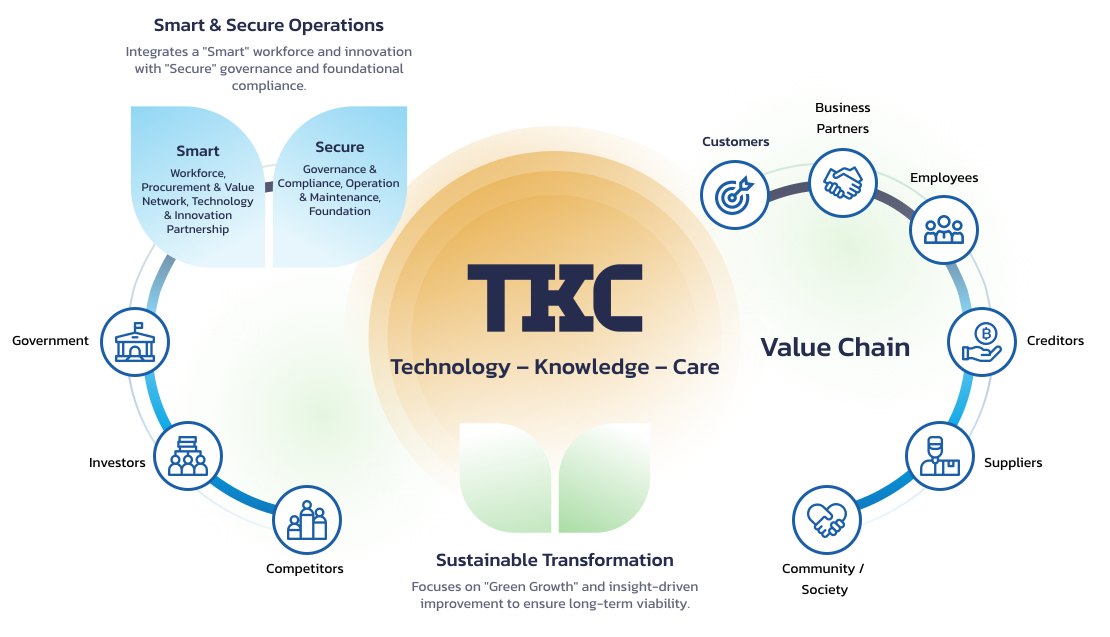
Value Chain Over the past year, the Company has prioritized the development of its workforce and operational processes to deliver exceptional quality to customers. Recognizing the importance of sustainable business management, we have analyzed the supply chain and adapted it into a value chain to align with our original framework. Our focus remains on delivering outstanding services and collaborating with strategic partners to foster sustainable growth. This involves developing solutions tailored to meet customer needs while prioritizing resource efficiency, environmental preservation, societal aspects, and behavioral changes. We also emphasize customer involvement in solution and employee development, ensuring a balanced work-life approach.
Key Activities

Input Management
- Project identification and selection aligned with the Company’s strategic objectives
- Identification and selection of capable suppliers and business partners
- Preparation of proposals and participation in project bidding processes
- Preparation of contracts in accordance with established standards and requirements
- Procurement of products, equipment, and services from suppliers, including inspection and acceptance in accordance with quality standards

Operations
- System design and installation, including network testing and system operation verification
- Project management and control to ensure alignment with project plans and timelines
- Efficient inventory storage and management
- Project delivery and acceptance in accordance with contractual conditions

After-Sales Management
- Providing training to customers on the use of systems and equipment
- Warranty services and preventive maintenance support
- Prompt inspection and resolution of operational issues
- Performance evaluation and customer satisfaction assessments to continuously improve services
Supporting Activities

- Transparent and efficient procurement and contracting processes
- Risk management across all stages of operations
- Development of innovation and digital technologies to enhance competitiveness
- Human resource development to strengthen knowledge and modern skills

Supply Chain Management
The Company is committed to achieving sustainable business growth while maintaining responsibility toward communities, society, and the environment. To achieve this, the Company has established strategies and frameworks for supply chain management that cover the selection of capable suppliers, risk assessment, and performance evaluation, while encouraging suppliers to operate with integrity, transparency, and respect for human rights. Suppliers are also expected to comply with standards related to labor, occupational health and safety, and environmental protection.
In addition, the Company implements supplier selection processes to ensure the procurement of quality products and services, while identifying and assessing supplier risks. A comprehensive risk management framework covering environmental, social, and governance (ESG) factors has been established to ensure that risk management approaches are aligned with risk levels. The Company also considers delivery quality and compliance with minimum legal requirements, including labor laws, environmental regulations, and quality management systems, in order to prevent and mitigate potential risks that may affect product and service delivery as well as stakeholder trust. Furthermore, the Company has established a Supplier Code of Conduct and a Procurement Code of Conduct, which both suppliers and procurement personnel are required to strictly follow.

Sustainable Procurement Practices
The Company is committed to promoting sustainable economic growth by adhering to responsible governance principles across the entire value chain, including economic, social, and environmental considerations. The Company recognizes the importance of creating shared value with all stakeholders under sustainability principles. As part of this approach, the Company implements processes for supplier selection, procurement of quality goods and services, and supplier risk identification and assessment to ensure sustainable collaboration with business partners.

Green Procurement
The Company places strong importance on environmental conservation by implementing a Green Procurement policy that promotes the selection of environmentally friendly products and services. This includes prioritizing products made from renewable resources, those that do not generate pollution, and those that comply with recognized sustainability standards, such as products certified with Green Labels. This approach aims to ensure efficient use of resources, reduce environmental impacts, and minimize risks associated with the use of hazardous materials that may affect employees and the organization. In addition, the Company supports the development and adoption of environmentally friendly products and services, contributing to the country’s long-term Net Zero goals.

Sustainable Procurement with Suppliers
The Company has established clear procurement procedures to serve as a guideline for managing procurement processes efficiently and effectively. These procedures aim to minimize risks and reduce the likelihood of operational errors in procurement activities. Both new and existing suppliers are subject to supplier qualification assessments, which include evaluations of risk factors as well as Environmental, Social, and Governance (ESG) considerations. In addition, the Company promotes ESG awareness and understanding among both suppliers and employees to ensure that ESG principles can be effectively integrated into operations, creating mutual benefits and long-term sustainable value for both parties.

Criteria for Identifying Key Suppliers

Critical Suppliers
Refer to a key supplier with high procurement value and high risk, whose products or components are essential to the Company’s operations and difficult to replace. These suppliers are classified as Critical Tier 1 Suppliers and are subject to assessment every two years, either through on-site visits or questionnaire-based interviews. Such suppliers are required to establish corrective action plans to mitigate risks and reduce potential impacts. They must also undergo monitoring in accordance with the Company’s Supplier Sustainability Guidelines to ensure that risks are properly managed and do not adversely affect the business, community, or environment. In addition, the Company also identifies Critical Non–Tier 1 Suppliers, which are suppliers that provide goods or services to Critical Tier 1 Suppliers. The criteria for identifying both categories of critical suppliers include:
- Procurement value of THB 10,000,000 or more
- Frequency of procurement of goods or services
- Relevance of the goods or services to the Company’s business operations

Non-Critical Suppliers
Suppliers with moderate or low procurement value and risk levels, or those not classified as high-risk Tier 1 suppliers. These suppliers are required to undergo supplier evaluations or assessments of their operational practices in accordance with the Company’s Supplier Sustainability Guidelines.

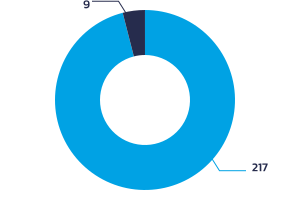
In 2025
Critical Tier 1 Suppliers
9 suppliers
Non-Critical Suppliers
217 suppliers
Unit: suppliers
New Supplier Evaluation Criteria
The Company has established criteria for selecting new approved vendors, covering economic and governance, social, and environmental aspects, to ensure that all suppliers conduct their business responsibly and in alignment with the Company’s sustainability principles. The screening process for new suppliers is designed to comprehensively assess their qualifications and standards. This includes evaluating key factors such as business ethics, labor and human rights practices, environmental management, and social responsibility, ensuring that the Company’s suppliers operate with transparency and are able to support sustainable growth throughout the supply chain.
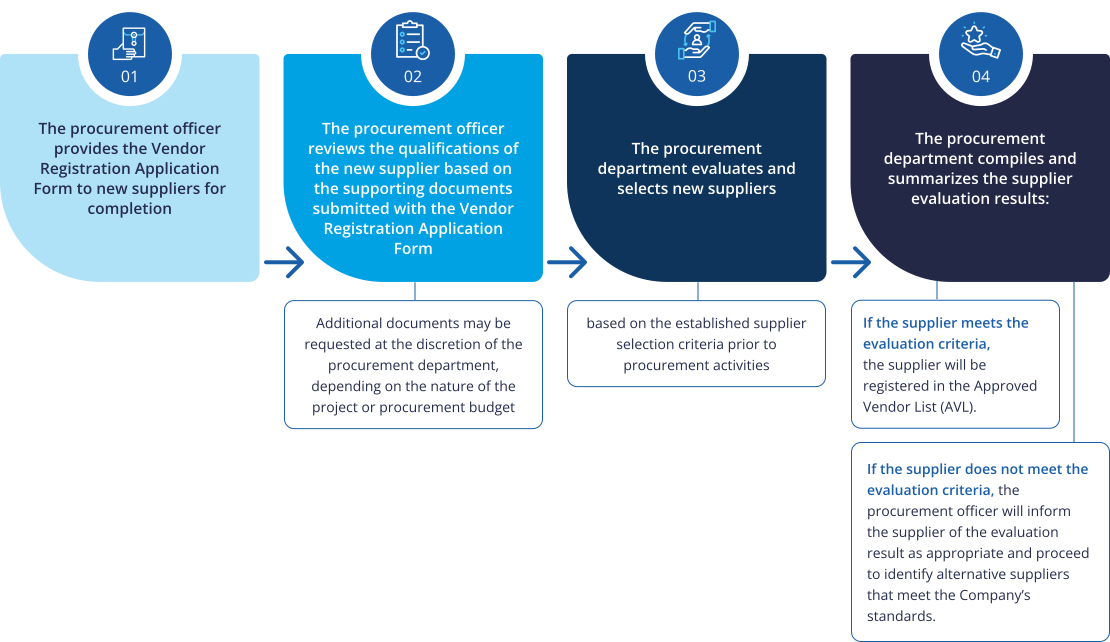
New Supplier Selection Process
New suppliers must undergo a qualification process before being registered in the Approved Vendor List (AVL). The selection process includes the following steps:

Targets
New Suppliers Assessed 2025
100%
Performance Results

| 2023 | 2024 | 2025 | |||
|---|---|---|---|---|---|
| Target | New Suppliers Assessed | Target | New Suppliers Assessed | Target | New Suppliers Assessed |
| 100% | 100% | 100% | 100% | 100% | 100% |
Sustainable Suppliers and Capacity Development
The Company recognizes suppliers as key partners in sustainable business operations and emphasizes long-term collaboration and mutual growth. The Company focuses on strengthening supplier capabilities through continuous development initiatives. The Company supports knowledge sharing, best practices, and business experience exchange with suppliers to enhance operational efficiency and strengthen the entire supply chain. These efforts are conducted in line with principles of good corporate governance and sustainable development, contributing to the creation of shared value for all stakeholders.

Promoting and Supporting Supplier Sustainability Development
The Company emphasizes operational practices that support the capacity development of suppliers through the following initiatives:
- The Company collaborates with suppliers in business planning to enhance operational capabilities. This includes developing new projects and fostering various forms of partnership that strengthen sustainability performance for both the Company and its suppliers.
- The procurement department conducts ESG assessments of suppliers to review their performance in accordance with the Company’s sustainability requirements.
- The Company fosters long-term relationships with suppliers through responsible procurement practices, including the purchase of environmentally friendly products, such as Green Paper (A4 recycled paper).

Supplier Sustainability Development (ESG)
The Company places strong emphasis on promoting and enhancing the capabilities of its suppliers in order to improve operational efficiency and foster sustainable growth together. Currently, the Company is in the process of implementing an electronic signature (e-signature) system to support the transition toward digital business operations. This initiative aims to improve convenience and efficiency, reduce the use of physical resources, and minimize environmental impacts, in alignment with the Company’s sustainability strategy.
On-Site ESG Audit of Suppliers
The Company has established criteria for conducting On-Site ESG Audits at supplier facilities to ensure that its procurement activities are carried out responsibly with respect to environmental, social, and governance (ESG) principles.
Scope of Suppliers Subject to On-Site ESG Audits

The Established Criteria for Conducting On-Site ESG Audits
- Critical Tier 1 suppliers
- Critical Non–Tier 1 suppliers identified as high-risk based on the Company’s supplier risk assessment
- Suppliers with previous ESG-related issues
- Suppliers that have received customer complaints regarding ESG-related practices

Audit Frequency
- At least once per year for high-risk suppliers
- Every two years for Critical Tier 1 suppliers with large contract values but no prior risk history
- Immediate follow-up audits if significant non-compliance issues are identified in previous assessments

Number of Suppliers Subject to On-Site Audits
- 2025: 0 suppliers
- 2026: 2 suppliers
- 2027: 3 suppliers
